Why This Conversation Is Happening Right Now
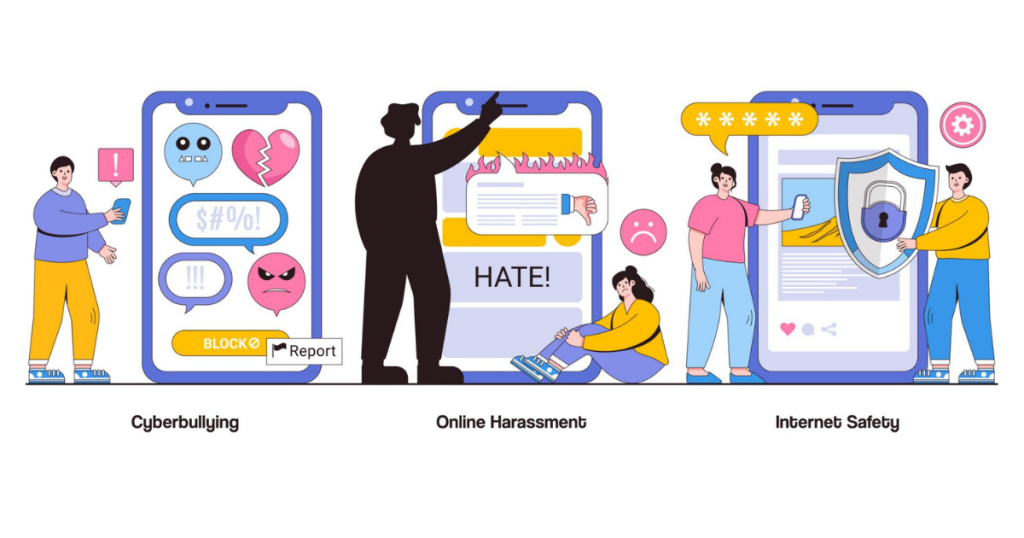
Recently, discussions about doxxing and digital safety have intensified in public conversations, particularly in connection with protests, civil unrest, journalism, whistleblowing, and online organizing. As more people use digital platforms to speak out, document harm, and demand accountability, those same platforms are increasingly being weaponized against them.
For some, this backlash takes the form of coordinated harassment.
For others, it escalates into exposure, intimidation, or threats that move from online spaces into real life.
Marginalized communities, survivors, activists, journalists, and people with limited institutional protection are often the most vulnerable to this kind of harm. Digital attacks do not happen in a vacuum; they exist within broader systems of power, inequality, and retaliation.
Understanding digital safety means understanding that context.
Groups such as PEN America have documented how online harassment and coordinated abuse are used to silence journalists, activists, and marginalized voices.
PEN America’s work on responding to online harassment highlights how coordinated digital abuse is used to intimidate and silence public voices.
Digital Harm Is Real Harm
Online abuse is often dismissed as “just the internet,” but the impacts are tangible and lasting. Doxxing can force people to relocate, leave jobs, withdraw from public participation, or live in heightened fear. It can isolate people from support networks and undermine their sense of safety in their own homes.
For many survivors, digital harm mirrors familiar abuse dynamics:
- Loss of control
- Constant vigilance
- Fear of being watched or targeted
- The sense that nowhere is fully safe
These experiences can slow healing and complicate recovery. Recognizing digital harm as real harm is an essential step toward survivor-centered responses.
Digital Safety Without Blame
Conversations about digital safety often unintentionally shift responsibility onto individuals:
Be more careful. Don’t post. Lock everything down.
While protective practices can be helpful, they are not a solution to abuse.
Survivors are not harmed because they failed to protect themselves online.
They are harmed because someone chose to violate boundaries.
Organizations like the National Network to End Domestic Violence offer digital safety resources for survivors navigating online harassment, doxing, and digital safety.
Digital safety should be framed as support, not as a moral obligation or a prerequisite for being believed. It should empower people without asking them to disappear, stay silent, or give up their voices in order to stay safe.
At Recovery Perspective, we focus on survivor-centered recovery resources that prioritize safety, autonomy, and healing rather than blame or silence.

Safety Planning Is Ongoing and Adaptive
Just as harm evolves, safety planning must evolve too. Digital safety is not a one-time fix; it is an ongoing process that may look different at different stages of someone’s life, recovery, or activism.
For some people, safety planning may involve tightening privacy settings or separating personal and public online identities. For others, it may mean community-based protection, documentation, or stepping back temporarily to regroup.
There is no single “right” way to navigate digital spaces safely.
What matters is that people are supported in making informed choices that align with their needs, values, and realities.
Understanding doxxing and digital safety is not just about navigating the internet more carefully—it is about recognizing how digital spaces can be used to cause real harm. Conversations about doxxing and digital safety matter because they sit at the intersection of technology, power, and personal safety. When we talk openly about doxxing and digital safety, we create space for awareness, prevention, and survivor-centered responses that prioritize protection over blame.
Holding Space for Complexity
It is possible to care about digital safety and care about accountability, justice, and collective action. These goals do not have to be in opposition.
Protecting people from harm does not mean abandoning movements, silencing dissent, or ignoring systemic violence.
Survivor safety and social change are not competing priorities.
They are deeply connected.
Closing Thoughts
Doxxing and digital harassment thrive in silence, confusion, and minimization. Talking about these harms openly—without panic, blame, or sensationalism—is one way to disrupt them.
For survivors, understanding digital harm can be validating.
For communities, it can be a call to act with more care.
For everyone, it is a reminder that doxxing and digital safety does not end at the edge of the screen.
Digital spaces are real spaces.
What happens there matters.
Content & Safety Disclaimer
This post discusses topics related to doxxing, online harassment, and digital harm. While it does not include graphic descriptions, these subjects may be distressing or triggering for some readers, particularly survivors of abuse, stalking, or harassment.
This content is shared for educational and awareness purposes only. It is not intended as legal advice, law enforcement guidance, or individualized safety planning. Every situation is different, and readers are encouraged to seek support that aligns with their specific needs and circumstances. Doxxing and digital safelty are serious subjects.
If you are currently experiencing harassment, stalking, or threats—online or offline—you deserve support. Consider reaching out to trusted people in your life or to survivor-centered organizations that specialize in doxxing and digital safety, domestic violence, or advocacy.
You are not responsible for harm done to you.
You are not obligated to stay silent to remain safe.
Your experience is valid.